
Business interruptions cause loss of time and revenue. No matter the industry, the results are the same and these occurrences can happen. It’s for this reason continuity planning for your business is so important.
Whether you’re a small business owner, or you work for a large company, continuity planning can speed up the recovery process and keep your business active during and after an emergency.
Let’s discuss how you can create an effective business continuity plan.
I | What is a Business Continuity Plan?
IBM defines a business continuity plan (BCP) as a document that outlines how a business will continue operating during an unplanned service disruption.
It’s your detailed disaster recovery plan containing the following:
- Procedures for emergency communication tools;
- Recovery strategies;
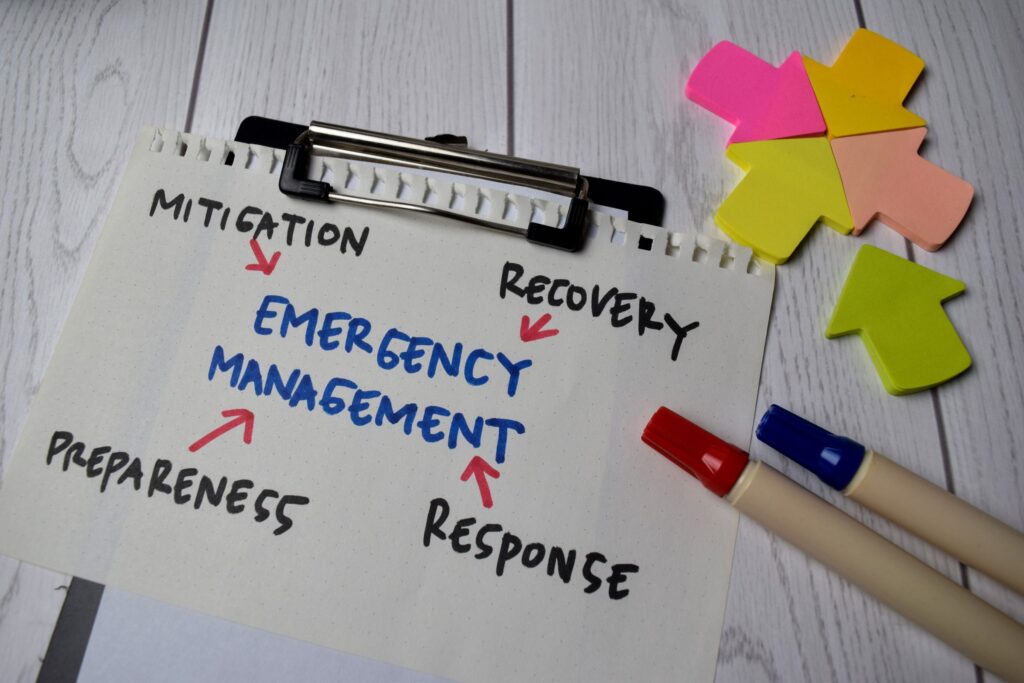
- And other steps for the reduction of adverse effects caused by potential threats.
Unfortunately, some organizations overlook creating a BC plan. They don’t view it as necessary for everyday operations. The immediate need for a continuity plan may not be visible, and one hopes you never need it, but it’s an essential element of your business toolkit.
II | Why Does Business Continuity Planning Matter?

As a business owner, your chief priorities include:
- Staying competitive;
- Keeping customers;
- Widening your customer base.
Slow recoveries prolong the negative impact on critical functions and heighten the risk of:
- Operational delays that weaken your position against competitors;
- Reputational damage from lack of customer confidence;
- Liability and legal filings by disgruntled clients;
- Financial ruin.
Creating a continuity plan safeguards your priorities and minimizes fallout risks.
Maintain business operations (even if it’s in a limited capacity).
“Some business” is better than no business. Keeping your company operational during a major disruption will decrease your financial losses. It will also send a message to your employees, corporate partners, and customers of your company’s resiliency and stability.
Secure your supply chain.
Supply chain disruptions are one of the most common problems you’ll face. Outside of a worldwide pandemic, labor strikes, the rise in prices or lack of raw materials, natural disasters, and the interruption in transportation channels can put a kink in the chain.
Business continuity management considers these possibilities and outlines pre-determined and tested workarounds.
Build customer confidence and protect your reputation.
An increase in confidence, especially from your customers, will translate well for your business. Meeting customer expectations sets the tone for your company. They expect professionalism, consistency, corporate responsibility, resiliency, and excellent customer service. Nowhere is this more apparent than in the wake of disruptive events.
How you respond in an emergency will bolster or damage your reputation.
Gain a competitive edge over your competitors.
The companies with the best response strategies recover the fastest with the least amount of bruises. Consumers watch brands closely in times of crisis. Your performance is another opportunity to build trust in your brand. Increasing confidence is an automatic advantage against the competition.
Decrease long-lasting financial risks.
Sustaining normal business operations, securing your supply chain, building customer confidence, protecting your reputation, and gaining a competitive edge provides a cushion. This cushion will protect your finances.
Recovering from a major disaster is faster and easier when you have a recovery strategy. Without backup plans, you’re risking a complete shutdown of your operations during disruptions.
III | The Top 5 Causes of Business Disruption

Each industry faces a unique set of risks. Completing a risk assessment before creating your continuity plan will highlight these industry-driven factors. The assessment will also show universal risks and those are the ones we’ll be examining.
1. Utility Outages
Power outages, water cut-offs, spotty communication signals, and lack of internet access are daily risks. For some businesses, they are minor inconveniences. Simple problems one can workaround with backup generators, stored water, cellphones, etc.
But, losing light and water could mean spoiled inventory and decreased sanitation without a proper water supply if you work in the food industry. Faulty lines can lead to physical damage to equipment and even cause fires.
Gauging the severity of the effects on your activities will determine how prepared you need to be.
2. Critical Equipment Failures
Another commonplace problem is equipment failure. If your company is mainly machine-based, you’ll need contingency equipment options. Storing backup equipment and researching alternative equipment suppliers will be part of your contingency planning.
Analyze your dependency on technology and outline steps for overcoming or working around the problem.
3. Cybersecurity Attacks
Attacks by cybercriminals can compromise your business and client information. Cyberattacks include malware, ransomware, and data theft. In a best-case scenario, the virus might hinder operations for a few hours. On the red zone end of the spectrum, you may lose important information, have copies stolen, or the hacker might hold the data for ransom.
4. Global Pandemic
Few of us thought we’d live to see a worldwide pandemic on the scale we’re experiencing now. Things escalated quickly, and companies worldwide came face to face with a formidable adversary. Those who could adjust and lessen the impact survived, while many more closed their doors.
We’ve seen it all so far:
- Supply chain disruptions with factory closures and decreased production. There was also the odd occurrence of a freight ship blocking a major seaway.
- Lockdowns stall business operations and lengthen critical business processes.
- Operations scaled downs, leading to the loss of needed revenue and rising unemployment rates.
- The decline in office productivity as employees work from home under unfamiliar conditions.
Though some companies took it hard, others pivoted, gaining a competitive edge. Adapting new methods of meeting their business objectives. One may credit their resilience to their continuity and disaster recovery planning.
5. Natural Disasters
No risk list would be complete without mentioning the devastating realities of natural disasters. Hurricanes, earthquakes, tornadoes, snowstorms, and wildfires are some of the natural threats we face in America. Meteorologists can predict the conditions for a hurricane. Tracking is such that they can provide prior warnings for its approach and evacuation notices for low-lying areas. Disasters like tornadoes and earthquakes, however, are wildcards.
All of them can cause serious physical damage to buildings, equipment, and inventory.
IV | How to Create a Business Continuity Plan
1. Research your industry and build your business continuity team.
All good plans start with research. The knowledge you gather will guide your disruption prevention strategies in crafting a successful plan. For this preliminary step, investigate the threats unique to your industry and the natural disasters prevalent in your area. List the most immediate and pressing problems you may encounter.
If you’re a sole proprietor, conducting research and planning will be your sole responsibility. So will the implementation and execution of the plan. If there are others in your employ, include relevant personnel (managers, supervisors, administrative assistants) in your planning process. Your BC team will help implement and execute the plan across the various departments.
The structure of your team depends on the size of your organization. Ideally, you’ll want at least one representative from each department.
2. Identify the goals and objectives of your BC plan.
Continuity management extends to all areas of your business. This is the reason your team’s so diverse and encompasses all departments. The overall aim of a BC plan is to preserve critical business functions and minimize the effects of disruption.
These two objectives, however, translate into different functions for each department. It also translates in varying terms depending on your industry. Brainstorm the goals and objectives suited to your company’s operations.
The goals you list in this step will influence the rest of your business continuity planning process.
List all the essential business functions during this meeting and designate individual tasks that will take you to the next step.
3. Conduct a risk assessment and business impact analysis (BIA).
Dive deeper into the potential threats your business faces. Research and analyze each risk factor for a clearer understanding of the financial, operational, and physical impact disruptions may cause.
Factor in different durations into your analysis. A power outage lasting several hours will have a different result than a statewide outage lasting a full day or two. Evaluate what happens if you change, reduce, or discontinue essential functions and services.
Business impact analyses are complex. They require a systematic approach to gathering information and analyzing the data. Take the time to complete a thorough examination and precise documentation of findings.
4. Perform a gap analysis.
Once you’ve conducted your BIA, check on how the present state of your company stacks up. How prepared are you to tackle the problems noted in the assessment? This process is what we call a gap analysis.
As the name suggests, this evaluation highlights the shortcomings between your company’s present resources versus what you’d require for disaster recovery. Examine all of your essential business functions for weaknesses or “gaps.”
With this analysis, you can first zero in on your business’s weak areas, expanding your recovery strategies.
Business Insurance
Consider your business insurance coverage. How well will your insurance protect you from severe financial losses during recovery? Do you have sufficient coverage? Or do you need to revise the coverage limit, add riders, and so on?
Contact your insurance agent and discuss the strength of your current policy.
5. Explore recovery options and strategies.
Now that you clearly understand the level of risk your business faces and where it falls short in preparedness, it’s time for solutions.
Plan practical solutions designed for optimal recovery. Outline each implementation procedure and note the required resources (financial, physical, and human) for successful execution.
Some recovery pointers:
- Alternative communication networks should there be any service interruptions after a disaster. You can’t efficiently carry out the plans if you can’t contact your team members.
- Backup site locations if your facility is no longer usable or employees will need to work from home. What help will you provide for a smooth transition in this process? You may also require a backup site for moving inventory out of danger.
- Accessible equipment alternatives should any become damaged.
- Set a recovery time objective. You want the time to be as short as possible, but it should also be realistic. The more prepared you are before a disaster strikes, the higher the chances of a full and speedy recovery.
6. Start putting the plan into action.
You know the problems, and you’ve devised solutions. Now it’s time to spread the information outside your business continuity management team.
- Present the plan to stakeholders and staff members. Let them know the roles they play in the recovery process. Provide them with documentation of the plan. Remember to issue updates if you make changes.
- Train your staff with drills and garner feedback about what works and doesn’t.
7. Assess and review your continuity plan for maximum efficiency.
The continuity plan you wrote at the inception of your business may not suit it a year down the road. Risks and requirements change and develop with your company and the broader business marketplace.
Constant evaluations of your company’s development ensure you always have a solid contingency plan.
Conclusion
Disasters won’t give you advance notice.
Your business continuity plan is a strategic forecast of potential risks. It outlines what you and your entire organization will do to keep the company operational. You never need a plan until you do; by then, it’ll be too late.
Protect your investment and critical business functions.
- Research your industry and build your business continuity team.
- Identify the goals and objectives of your BC plan.
- Conduct a risk assessment and business impact analysis (BIA).
- Perform a gap analysis.
- Explore recovery options and strategies.
- Start putting the plan into action.
- Assess and review your continuity plan for maximum efficiency.